Hollywood needed a game-winning shot with 18 seconds left, a scrappy underdog, and a packed gym to make “Hoosiers” work. The Milan 1954 real story didn’t need any embellishment at all — if anything, the truth was stranger, slower, and in some ways even more dramatic than the movie that made it famous.
What Actually Happened in the Milan 1954 Real Story
On March 20, 1954, Milan High School — enrollment 161 — walked into Butler Fieldhouse in Indianapolis to face Muncie Central, a school of 1,662 students chasing its fifth state championship after already winning back-to-back titles in 1950 and 1952. Milan had already survived a semifinal win over Terre Haute Gerstmeyer, holding star scorer Arley Andrews to just nine points in a comfortable 12-point victory to reach the final.
The championship game itself was a defensive slog. Both teams were tied 26-26 after three quarters, and Bobby Plump — the player the movie would later reinvent as Jimmy Chitwood — was having a rough shooting night, having connected on just 2 of 10 shots up to that point. That’s when Milan coach Marvin Wood, just 24 years old, made the decision that actually defined the game: he had his team freeze the ball.
The Part the Movie Skipped Entirely
This is where the Milan 1954 real story gets stranger than fiction. With the score tied and time running, Plump simply stood at the top of the key and held the ball, unguarded, for more than four minutes straight during the fourth quarter — an eternity in basketball terms, and something no modern shot clock would ever permit. Several possessions later, he froze the ball again for close to another full minute before the sequence that actually decided the state championship.
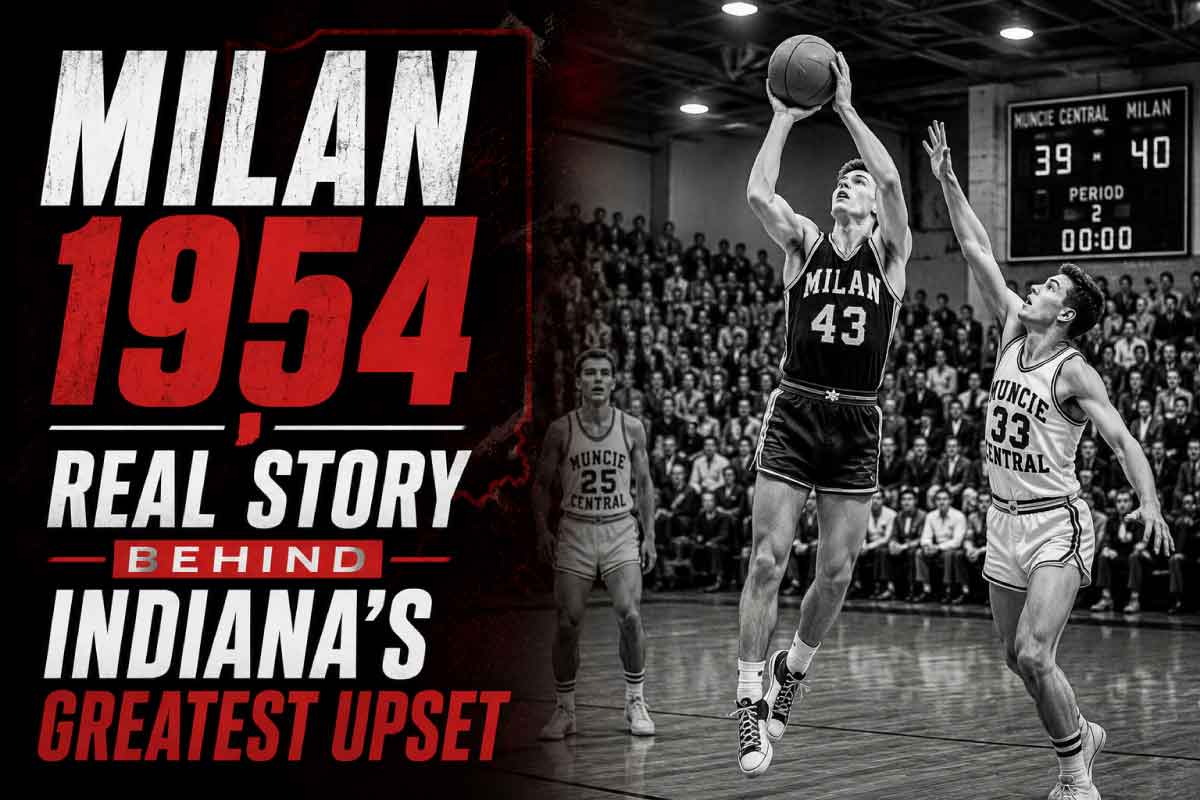
With the score knotted at 30 and just 18 seconds remaining, Milan called a timeout. Everyone inside the sold-out, 15,000-seat Fieldhouse — tickets had been scalped for as much as $50 — knew exactly what was coming. Plump dribbled right, worked his defender, and rose up for a 14-foot jumper from the right elbow over Muncie Central’s Jimmy Barnes. The shot dropped. Milan won 32-30, and the final buzzer sounded before Muncie Central could even inbound the ball. Referee Cyril “Cy” Birge said afterward he stood directly under the basket and watched the ball hit the floor as the gun went off — Muncie never got a chance to respond.
Why the Milan 1954 Real Story Beats the Movie Version
Screenwriter Angelo Pizzo has been candid about why “Hoosiers” doesn’t actually follow the real events very closely. After researching the true story, Pizzo said he realized he needed far more dramatic license than reality offered. “These were pretty good boys who did their job, went to school and played as they were told,” Pizzo said. “There wasn’t really much conflict.” So the film compressed Milan’s 1952-54 seasons into one dramatic arc, invented tension between the coach and the town, and changed the championship score from Milan’s actual 32-30 to a more cinematic 42-40 for the fictional Hickory Huskers.
Bobby Plump himself has been blunt about how much of the movie was pure invention. “The final 18 seconds were the only thing factual in the movie about the Milan-Central game,” Plump told ESPN. Even then, the filmmakers stayed remarkably faithful to that one sequence — the movie’s final shot was filmed from virtually the same spot on the floor as Plump’s actual game-winner, and the championship scene was shot inside the very same building, Butler Fieldhouse, where the real game happened three decades earlier.
A Connection to Another Indiana Basketball Legend
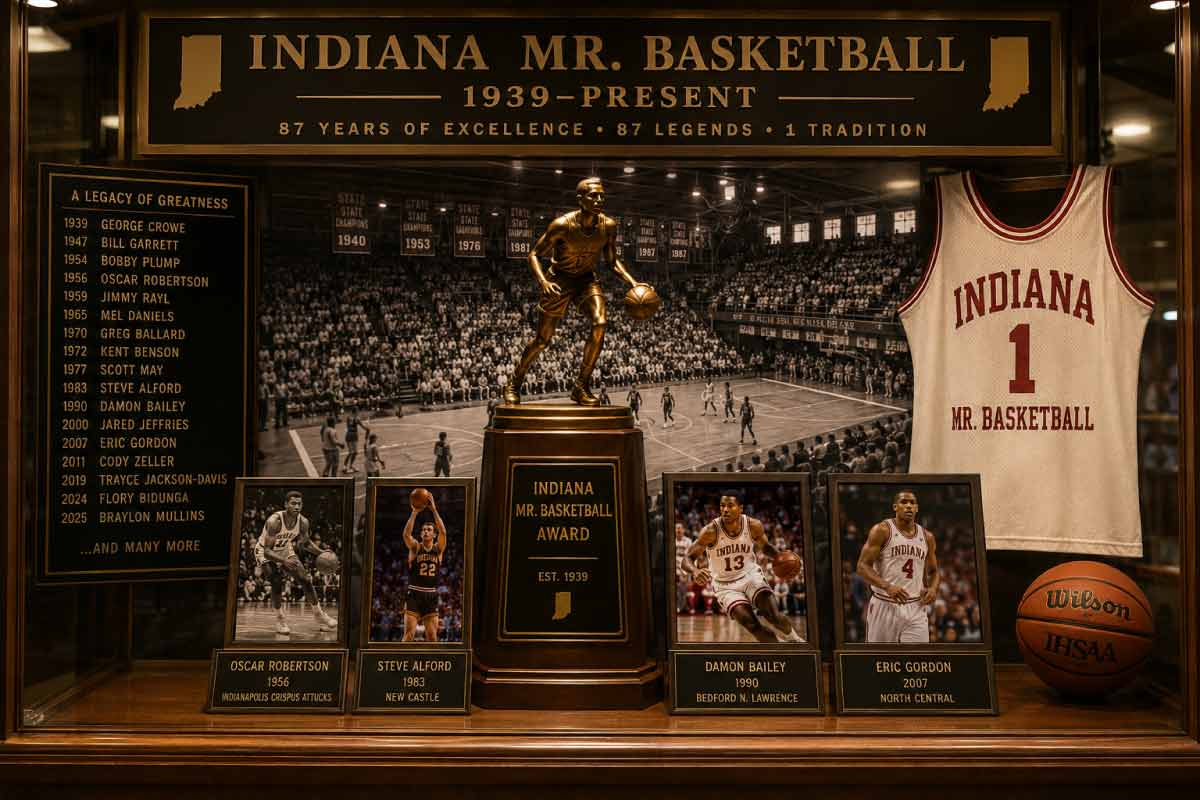
There’s a smaller, often-overlooked detail buried in the production of “Hoosiers” that ties directly back to another chapter of Indiana basketball history. Ray Crowe, the coach of Indianapolis Crispus Attucks, and his brother Bailey Robertson served as the head coach and assistant coach for the fictional South Bend Central team the movie’s Hickory Huskers face in the state final. Crowe’s real Crispus Attucks teams — led by a young Oscar Robertson — won back-to-back state titles in 1955 and 1956, becoming the first all-Black team to win an IHSAA championship, just one year after Milan’s own improbable run.
Why This Still Matters Seven Decades Later
No school Milan’s size had ever won Indiana’s single-class state basketball tournament before that March night, and under the state’s current four-class system — adopted in 1997 specifically because moments like this had become so rare — no school that small will ever get the chance again. That’s what made the “Miracle of Milan” nickname stick, and it’s exactly why the real story has outlasted the fictional one in the hearts of most Hoosiers, even as “Hoosiers” itself became the most celebrated sports movie ever made.
Life for the Milan Players After the Championship
Most of the actual Milan Indians went on to fairly ordinary lives after their moment of statewide fame, a detail that itself separates the true story from the movie’s more theatrical instincts. Bobby Plump played college basketball at Butler University before settling into a long career in the insurance and real estate business back in Indiana, never fully able to escape being recognized as the man who hit “the shot heard ’round the world.” Several of his teammates returned to farming, teaching, or small-business ownership in the same rural communities they grew up in, a far cry from the kind of career arc Hollywood typically hands its sports heroes.
That ordinariness is itself part of what makes the real story compelling. These weren’t larger-than-life characters manufactured for a three-act structure — they were teenagers from a town so small it didn’t have running water in some homes, who happened to get hot at exactly the right moment against exactly the right opponent, on the biggest stage Indiana basketball had to offer.
How the Story Became Permanent
Milan’s win didn’t just create a nickname — it created a template. Every subsequent small-school upset in Indiana basketball gets measured against the “Miracle of Milan” almost by reflex, and the annual pilgrimage of fans to Milan’s basketball museum and the town’s painted water tower keeps the actual 1954 story alive independent of whatever Hollywood added on top of it. Nearly every player from that championship roster spent decades fielding the same question from strangers — what was it really like — and by all accounts, most of them never tired of answering it, precisely because the true version of events needed no exaggeration to hold a room.
FAQ
Q: What was the final score of the real 1954 Milan-Muncie Central game?
A: Milan won 32-30, a much lower-scoring finish than the movie’s fictional 42-40 result.
Q: How long did Bobby Plump hold the ball before the game-winning shot?
A: Milan froze the ball for more than four minutes at one point in the fourth quarter, then again for nearly another minute before the final possession.
Q: Did Bobby Plump think the movie was accurate?
A: No — Plump told ESPN that “the final 18 seconds were the only thing factual in the movie about the Milan-Central game.”
Q: Why did the screenwriter change so much of the real story?
A: Angelo Pizzo said the real players had little actual conflict among them, so he needed more dramatic license to build a compelling film narrative.